
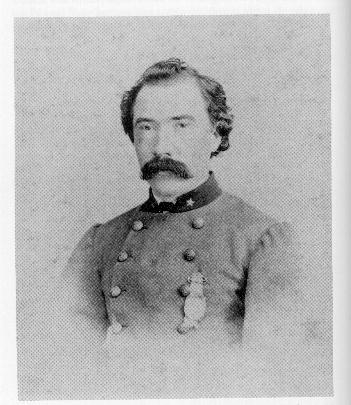
Major Richard W. “Dick” Dowling
TO BE HELD ON THE HALLOWED GROUND OF THE ACTUAL BATTLEFIELD
AT THE
SABINE PASS BATTLEGROUND STATE HISTORIC SITE
6100 Dowling Rd.
Port Arthur, Texas
JOIN US FOR A WEEKEND FULL OF FUN AND EXCITEMENT FOR EVERYONE!
***HISTORIC SCENARIOS PERFORMED THROUGHOUT THE DAY***
***SEE ACCURATE REPRODUCTIONS OF CLOTHING AND UNIFORMS***
***SEE AUTHENTIC DEMONSTRATIONS OF EQUIPMENT AND WEAPONS***
***TOUR CONFEDERATE and UNION ARMY ENCAMPMENTS***
***FOOD & VENDORS***
* * * * * For a full Schedule of Events, Driving Directions to the Historic Site and Nearby Lodging Please Click here * * * * *
COME and SEE and HEAR
UNION and CONFEDERATE
Soldiers, Sailors, and Marines
of all
Branches of Service
AT WAR and AT PEACE!
FULL SCALE
CIVIL WAR
MILITARY ENCAMPMENT
FOOD, VENDERS, EXCITEMENT
SEE and TALK to the
Citizens and Soldiers of
19th Century Sabine Pass, Texas
!!!!! FREE ADMISSION !!!!!
Hosted by the TEXAS HISTORICAL COMMISSION
Sponsored by the FRIENDS of SABINE PASS BATTLEGROUND and the JEFFERSON COUNTY HISTORICAL COMMISSION
Coordinated by DICK DOWLING CAMP 1295, SONS of CONFEDERATE VETERANS
* * * * * ALL Participants Are Asked To Please Pre-Register * * * * *
* * * * * PLEASE CLICK HERE FOR RE-ENACTOR REGISTRATION INFORMATION * * * * *
The Texas Historical Commission requires that all participants in living history
activities at State Historic Sites review their SAFETY MANUAL (May 2010 Revision)
and
* * * * * print and sign the release on the last page. * * * * *
The signed releases will be collected by the Lead Safety Officer at the event.
* * * * *
Click here for the Safety Manual and Release Form
* * * * *
For additional information please Email: DickDowling@rocketmail.com
Visit Lt. Richard W. "Dick" Dowling on Facebook to learn more about Dick Dowling Days,
The Battle of Sabine Pass, Sabine Pass State Historic Battleground Site
and Friends of Sabine Pass Battleground.
Also view some interesting photos while you are there.
CLICK HERE to go to the Friends of Sabine Pass Battleground's Facebook page
Background:
The Summer of 1863:
The Confederate States of America had been fighting for their independence from the United States of America for two long violent years.
They had just suffered two serious setbacks with the fall of Vicksburg, a vital Mississippi River city, and the virtual destruction of Robert E. Lee’s army in Gettysburg, Pennsylvania, both, ironically, on the 4th of July.
Union commanders viewed it as an ideal time invade and occupy Texas. Soldiers, equipment and ships were gathered in Union-held New Orleans for a ten thousand-man invasion force for the occupation of Texas. The destination chosen was the mouth of the Sabine and Neches Rivers at Sabine Pass on the Texas and Louisiana border.
In early September, four heavily armed gunboats and eighteen transports set sail on the Gulf of Mexico. On board was the first half of the invasion force sent to overcome any enemy defenses along the rivers.
Guarding the entrance to Sabine Pass was Fort Griffin, an uncompleted earthen fortification. Its only armament was a battery of six smoothbore artillery pieces. Manning the guns was one undersize company of Confederate volunteers; Company F of the 1st Texas Heavy Artillery Regiment.
Known as the Davis Guard, they were very a well-drilled and highly patriotic unit made up of Irish immigrants who had seen action at the Battle of Galveston and had been instrumental in capturing two Union blockading ships the year before.
On the morning of September 7th the Federal fleet arrived at the mouth of the pass. Many of the men of the Davis Guard, including Captain Frederick Odlum, Commander of Fort Griffin, were on leave, sick, or attending to duties away from the post. Command of less than fifty men fell to young Lieutenant Dick Dowling.
Confederate high command advised that Dowling destroy his guns and withdraw, but, knowing that there weren’t sufficient forces to defend Beaumont, Orange, and their important railroads, he determined to stay and try to fend the Yankee fleet off at the pass.
The next morning, the Union gunboats approached the fort and fired a barrage of shells. Dowling kept his men concealed and didn’t return fire. The union commanders were deceived into thinking that the fort was empty and that the Confederate guns were fakes. The attack was ordered to proceed. The gunboats USS Clifton, USS Sachem, USS Arizona, and USS Granite City steamed to the attack.
Again, the fort held its fire until the Sachem was within range of his old smoothbores. At Dowling’s command, the Davis Guard commenced firing, and crippled the Sachem by exploding her boilers with one of its first shots. Wounded and scalded men poured into the water where many drowned in the pandemonium as she surrendered.
Dowling then turned his attention to the Clifton. Her tiller ropes were soon shot away and she was stuck on the shallow, muddy river bottom within easy range of Irish gunners. A terrible artillery dual ensued as the Davis Guard and the Clifton exchanged volley after volley. Additionally, US Marine sharpshooters on board were raking the fort with musket fire.
One of the Clifton’s guns was struck by a shell, destroying it and killing the gun crew. Then her boiler, too, was struck. It exploded, sending many of the sailors and marines overboard, wounded, scalded and drowning. She quickly surrendered also.
The two disabled gunboats now blocked the only water deep enough to safely navigate past the fort. The remaining gunboats and transports fled fearing Confederate reinforcements, but the tide was out and many were too heavily laden to get back across the sandbars and back out into the gulf. Equipment, provisions, and livestock had to be thrown overboard to lighten them. They returned to New Orleans, defeated, the invasion of Texas was never attempted again.
The members of the Davis Guard were awarded medals for their heroism. Fearing a second invasion try, Fort Griffin was reinforced and Fort Manhassett was constructed nearby. Dick Dowling was promoted to major and toured the South recruiting more soldiers for the Confederate cause. After the war, he returned home and was a popular and successful businessman. He died of Yellow Fever at age twenty-nine, and had one of the largest funerals ever seen in Houston.
Confederate President Jefferson Davis called the Battle of Sabine Pass one of the most heroic acts in the history of warfare.
* * * * * PLEASE CLICK HERE FOR RE-ENACTOR REGISTRATION INFORMATION * * * * *
For additional information please Email: DickDowling@rocketmail.com
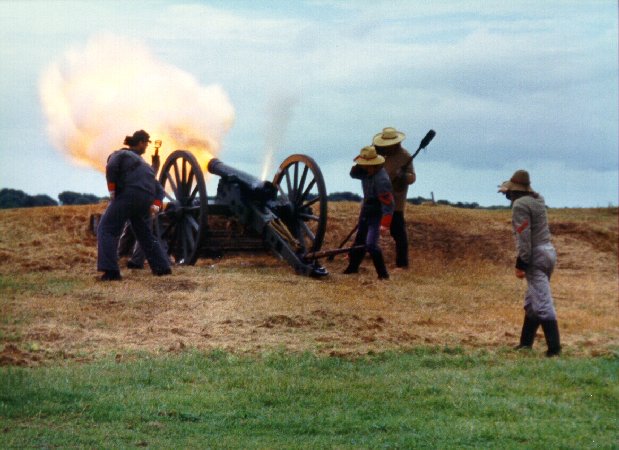
(Image borrowed from friends who participated recently.)
 Back to the Dick Dowling and the Battle of Sabine Pass Home Page
Page last updated: Feb, 1 2013